
11.06.2015
Report on child labour in the prawn industry published
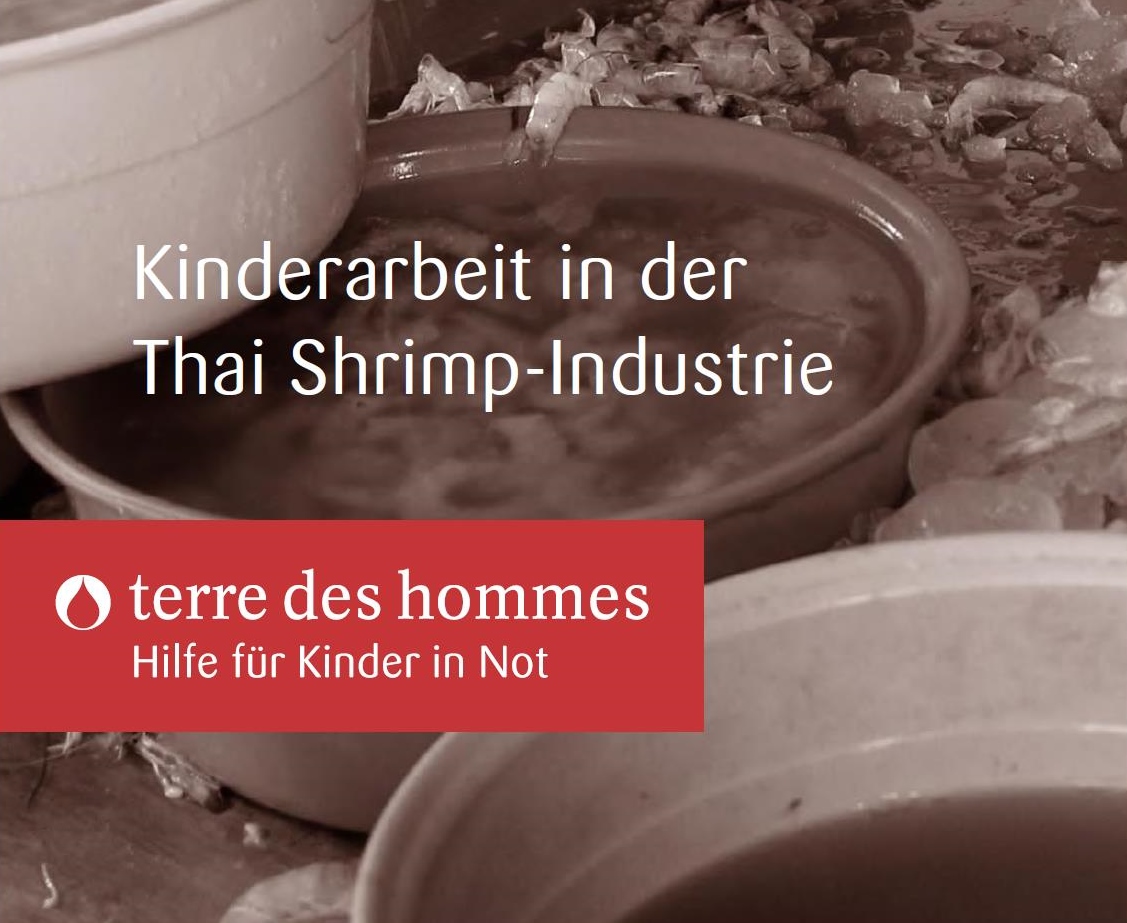
Just under 55,000 tonnes of prawns were imported into Germany last year, more than ten per cent of which came from Thailand. There, what was once a luxury product is produced cheaply – often with disregard for human rights and at the expense of the environment.
In a recent study published to mark the World Day Against Child Labour on 12 June, terre des hommes highlights child labour as a key problem in the sector.
The 2015 Child Labour Report, produced in collaboration with the Südwind Institute and the Hamburger Stiftung für Wirtschaftsethik, examines the value chain of the prawn industry from larval stock right through to the consumer. Entitled ‘Child Labour in the Thai Shrimp Industry’, the study highlights that of the up to 30,000 children and young people working in Thailand’s seafood processing industry, many labour under conditions that neither allow for schooling nor offer any prospect of a better life. The work is poorly paid – and is almost always carried out by migrants. As in many other sectors, poverty is therefore the main driver of the problem in the prawn sector too.
In addition to child labour, the study’s detailed analysis of the value chain highlights environmental pollution, slavery and forced labour in particular as serious risks associated with production. The recommendations for improving the situation, with which the report concludes, are addressed to policymakers, the business community and civil society actors alike. The 2015 Child Labour Report is available to download free of charge.
2015 Child Labour Report: Child Labour in the Thai Shrimp Industry