
12.03.2013
German electronic waste on its way to Africa
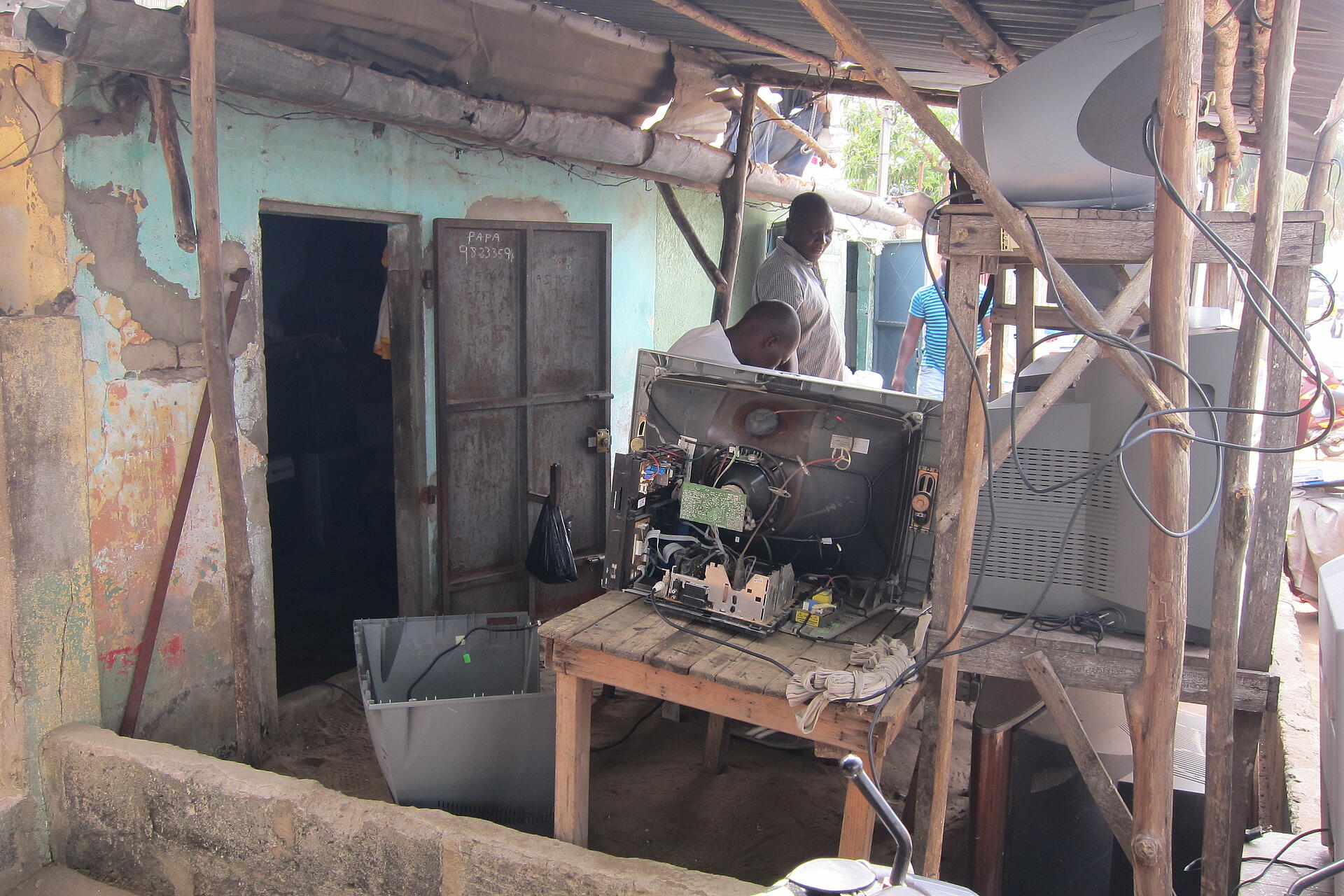
Cotonou, Benin, 2013
Dieter Klemke, Frankfurt am Main: For years, headlines such as ‘Electronic waste is flooding West Africa’ (Blick); ‘Europe’s toxins are contaminating playgrounds in Africa’ (Spiegel online); ‘Vast quantities of electronic waste are leaving Germany illegally’ (Die Zeit), drawing attention to problems in the disposal of used, obsolete and defective electrical and electronic equipment.
And for years now, the German legislature has also been trying to tackle this abuse through legislation and regulations. What ends up in Africa’s rubbish dumps originates in German towns and local authorities. However, all efforts to put an end to the export of electronic waste through laws and regulations have so far failed to prevent the situation in the recipient countries from deteriorating further.
The reasons for this lie primarily in the implementation of the laws, with the imprecisely worded regulations on the one hand and the persistent staff shortages in all relevant areas on the other being regarded as decisive factors.
According to figures from the Frankfurter Entsorgungs- und Service Gesellschaft (FES), exactly 3,286.11 tonnes of waste electrical and electronic equipment were collected in Frankfurt am Main in 2011, including 515 televisions, 140 fridges and 145 cookers, washing machines and dishwashers. However, the waste management specialists assume that an even larger proportion went unrecorded, as it was disposed of on the street, for example, in connection with bulky waste collections.
This highly lucrative trade in valuable raw materials from waste electrical and electronic equipment is being tackled by the police task force ‘Goldgrube’, set up specifically for this purpose.
However, the leadership of ‘Goldgrube’ is extremely secretive and has no interest in making its findings public.
Peter Postleb, head of the city’s “Clean Frankfurt” task force, expressly regrets the police task force’s reticence. He argues that this means an essential deterrent is being “wasted”. The responsibilities of the city’s “Clean Frankfurt” task force include, amongst other things, the coordination and management of all regulatory measures against litterbugs. The Dortmund police demonstrate that things can be done differently, as they publicise the results of their work more proactively (see press release from the Association of Municipal Enterprises – VKU).
According to Peter Postleb, cooperation with the police is also difficult because Hesse still lacks a clear legal basis for penalising littering offences – this applies in particular to electronic waste. To date, there is not even a schedule of fines.
Added to this is the acute staff shortage, not only within the police force but also at the responsible Darmstadt Regional Council, which is in charge of issuing authorisations for the collection of hazardous materials and is facing a mountain of unprocessed applications.
This fact has enormous implications for enforcement practice, as there is no obligation for a waste collector to carry this authorisation with them whilst on duty. In an emergency, inspectors are faced with the choice of either taking the scrap dealer’s assurances at face value or carrying out a time-consuming and labour-intensive inspection.
When asked about the measures he, as a practitioner, believes could put a stop to the illegal trade in electronic waste, he calls for, in addition to stricter requirements for obtaining a business licence, clearly defined criminal offences and administrative offences relating to electrical recycling, as well as more user-friendly collection schemes for waste electrical and electronic equipment.