
Hamburg 2024: NOlympia oder OlympiJA?
On 29 November 2015, the people of Hamburg were able to vote on whether their city should bid to host the 2024 Olympic Games. In the preceding debate on the pros and cons, supporters highlighted the ‘fascination of the Olympics’, whilst also emphasising Hamburg’s ‘unique opportunity’ to establish itself as a world-renowned metropolis and, at the same time, to implement forward-looking urban development projects.
Opponents warned – amongst other things – of a “money pit”, growing social inequality, advancing gentrification and environmental damage. But which outweighs the other: opportunity or risk? Do the facts even allow voters to make a well-founded decision? Or should citizens actually issue the International Olympic Committee a “blank cheque”, as the “NOlympia Hamburg” initiative claims? These were the questions ahead of the referendum, in which a majority ultimately voted against the bid.
The teaching materials were designed to explore the topic ahead of the referendum and remain available in their original form. In particular, the lesson unit on the parliamentary referendum – newly introduced in connection with the Olympic bid – has lost none of its relevance.
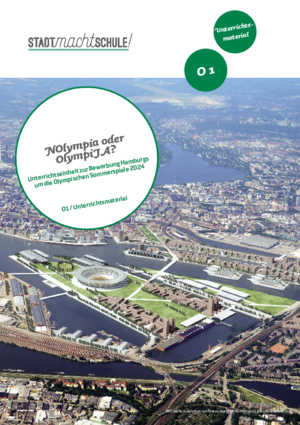
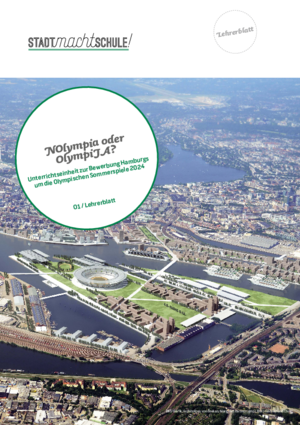
The teaching unit ‘NOlympia oder OlympiJA?’ (O1) examines the key players and controversies that shaped the debate surrounding Hamburg’s Olympic bid. The unit focuses not only on the conflict and the arguments used within it, but also on the question of what criteria the people of Hamburg might ultimately use to make their decision. Pupils are therefore asked to vote at the beginning and end of the lesson: Olympics – yes or no? Based on the results and the ‘shift in voter support’, pupils can then reflect on and discuss which arguments and criteria were decisive for them in the polling booth – and, where applicable, why they marked their ballot differently in the second vote compared to the first.
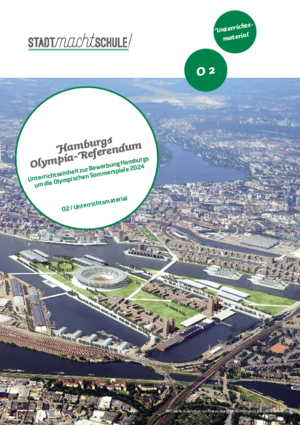
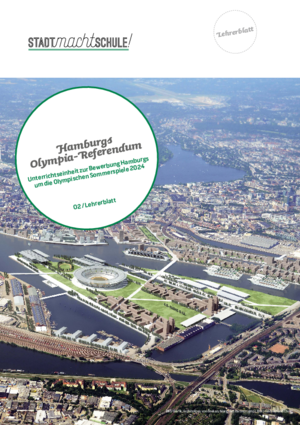
However, it is not only the substantive issue that makes the Olympic bid an interesting topic for the classroom, but also the controversial constitutional amendment introducing the parliamentary referendum. This second aspect is the subject of the follow-up lesson (O2): What exactly is a referendum, who can call one and under what conditions – and why, in fact, is the Hamburg solution criticised by the organisation ‘Mehr Demokratie’ as a threat to direct democracy?
The units ‘NOlympia oder OlympiJA?’ (O1) and ‘The Parliamentary Referendum’ (O2), along with a teacher’s guide for each containing further information and guidance on implementation, are available as free downloads on the right-hand side of this page.

The teaching materials from Stadt! Macht! Schule! are licensed under a Creative Commons Attribution – Non-Commercial – No Derivatives 3.0 Unported Licence.