
05.12.2018
Panel discussion on sustainability in the cocoa industry
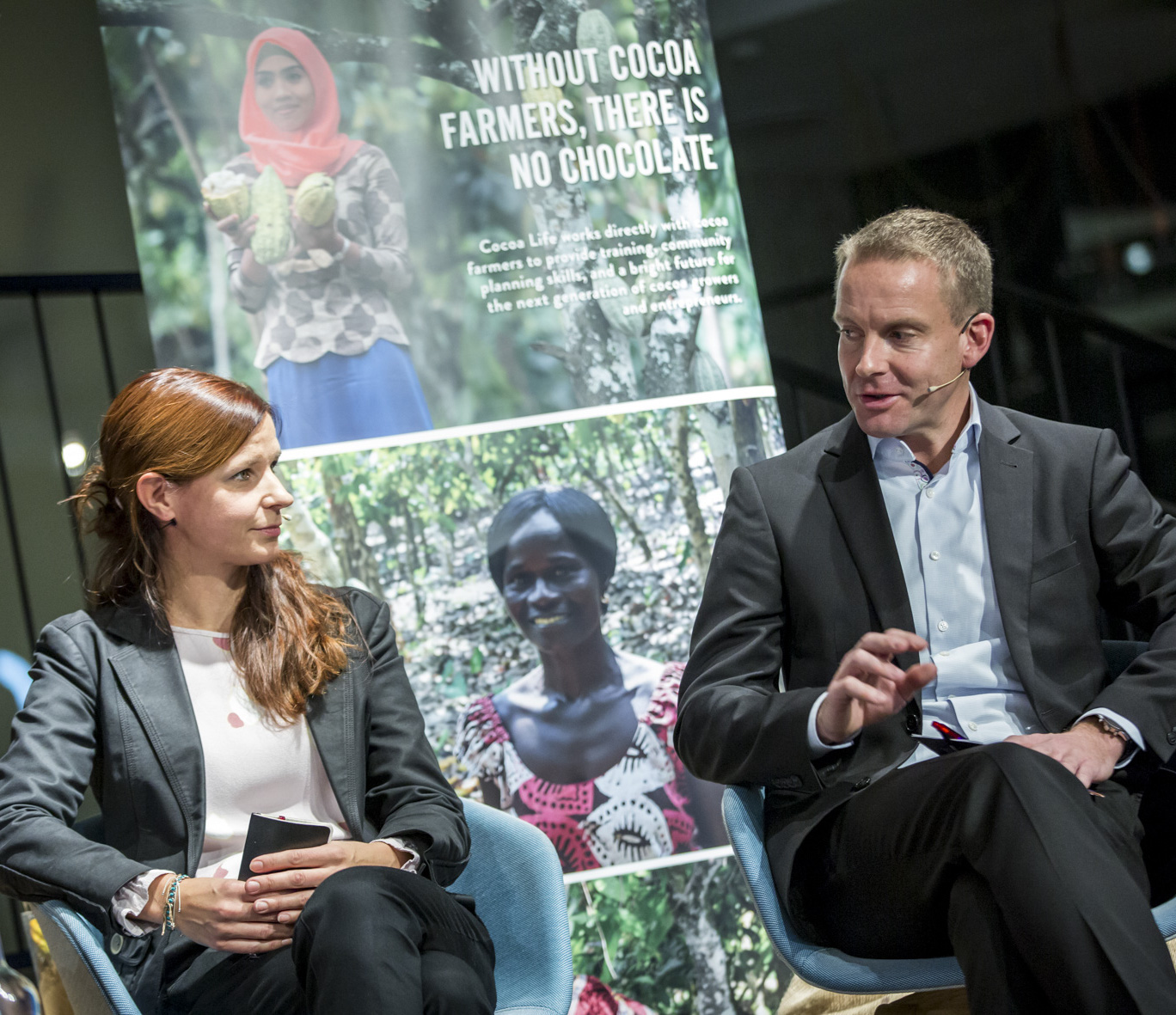
Dr Christiane Hellar (Hamburger Stiftung für Wirtschaftsethik) and Florian Schütze (Lidl)
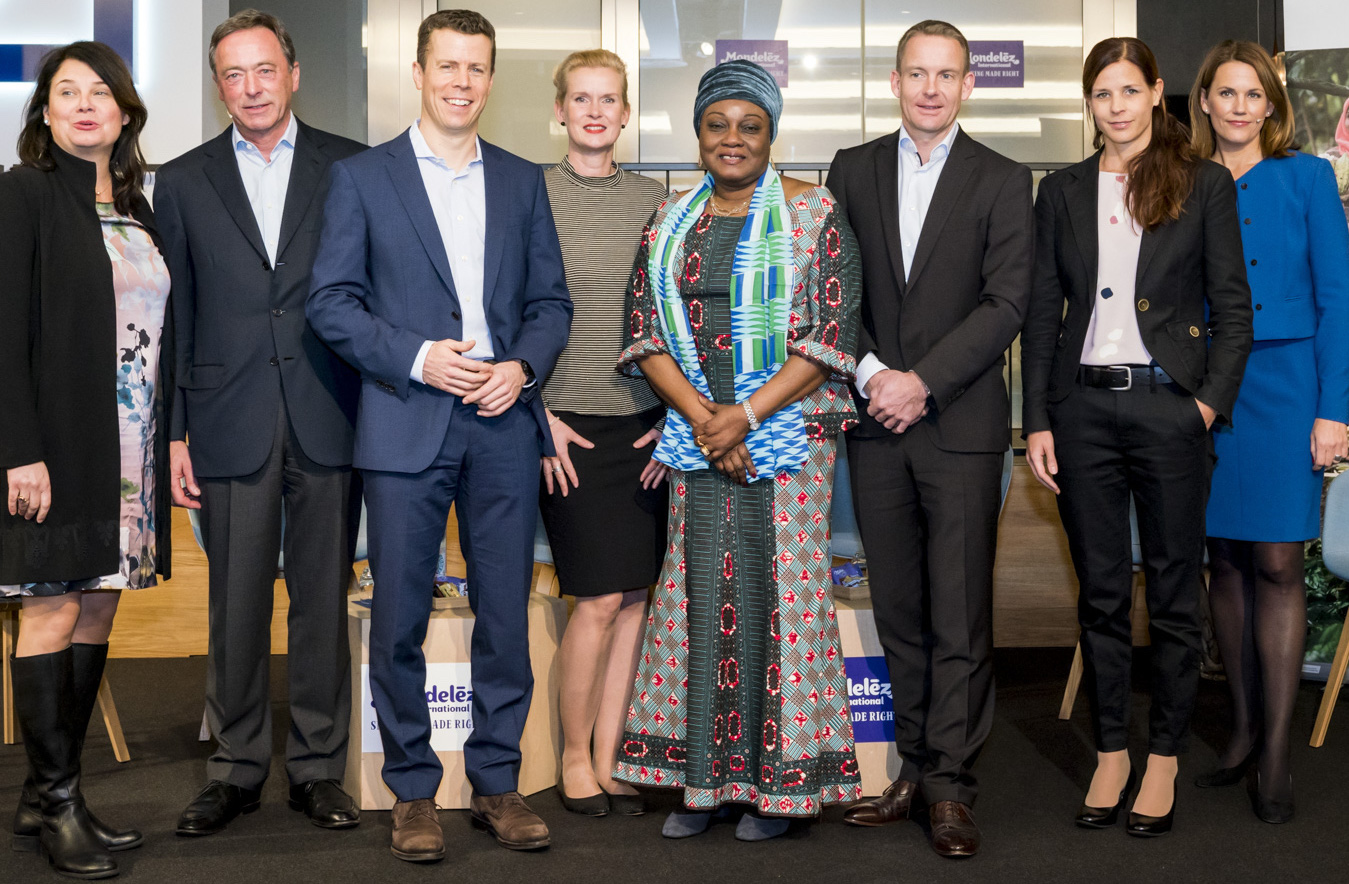
The panellists were Ulrike Hiller (State Councillor for Federal and European Affairs and Development Cooperation, Free Hanseatic City of Bremen), Wolf Kropp-Büttner (Chairman of the Board of the Forum for Sustainable Cocoa), Fridolin Frost (Managing Director of Snacks for Mondelēz International in Germany and Austria), Heike Hauerken (Head of Corporate Communications at Mondelēz Germany and Austria), Gina Ama Blay (Ambassador of Ghana), Florian Schütze (Head of CSR, Lidl International), Dr Christiane Hellar (Deputy Director of the Hamburger Stiftung für Wirtschaftsethik) and moderator Barbara Scherle (from left)
At the invitation of the US food company Mondelēz (manufacturer of ‘Milka’, amongst others), experts from the worlds of politics, industry and retail gathered in Berlin on 22 November 2018 to discuss the pressing challenges facing the cocoa sector in its move towards greater sustainability.
Speaking on behalf of civil society, Dr Christiane Hellar, Deputy Director of the Hamburger Stiftung für Wirtschaftsethik, called for greater attention to be paid to the power imbalances within the cocoa value chain than has been the case to date. Only in this way, she argued, could the necessary structural changes be achieved. Farmers are still not adequately represented, either politically or economically. Their involvement in the design of projects in producer countries – for example, those aimed at preventing child labour and improving farming methods – must be urgently strengthened.
There was broad agreement amongst the panellists regarding the current situation in Ghana and Côte d’Ivoire. Following the significant fall in prices in recent years, it had become alarmingly clear just how little the living conditions of farmers had actually improved. This applied even to families who produced certified cocoa or benefited from companies’ own programmes for more sustainable cocoa farming.
Disillusionment with the current situation led the panellists to call for a further intensification of joint efforts. Dr Christiane Hellar pointed out that, in addition, the creation of a regulatory framework was essential. Interestingly, opposition to this came from the political sphere: Ulrike Hiller, State Councillor for Federal and European Affairs and Development Cooperation of the Free Hanseatic City of Bremen, expressed scepticism about the need for legislative measures. In contrast, Florian Schütze, Head of CSR at Lidl International, speaking on behalf of the retail sector, emphasised the importance of a level playing field. He argued that companies which were increasingly fulfilling their human rights due diligence obligations, in particular, needed to be protected from unfair competition through appropriate regulation.
Although the discussion, which was introduced by a keynote speech from the Ghanaian Ambassador, Gina Ama Blay, was generally uncontroversial, the evening demonstrated once again that new approaches must be found to bring about tangible changes for the benefit of farmers. An important step towards a more sustainable cocoa sector would be to improve traceability, for which shortening the value chain, amongst other things, could be an effective driver.