Fish – an Ethical Risk Assessment
Fish – an Ethical Risk Assessment
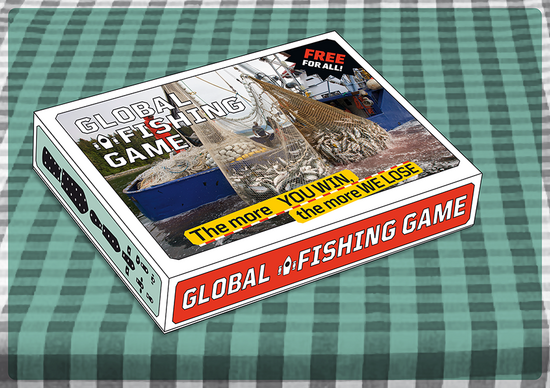
The hunt for fish has turned into a race, with the focus now on stocks in the middle of the ocean and hundreds of metres below the surface – stocks that once seemed out of reach. Far from the coast, industrial fishing vessels use modern technology to locate their prey, hauling entire shoals on board in their enormous nets.
The race for this coveted resource is by no means always fair. The increasingly complex regulatory framework is patchy and non-binding in many respects. And so the tragedy unfolds: the nature of fish as a common-pool resource, the absence of a global regulatory body and the impossibility of effective controls at sea spell disaster for fish – and consequently for the people who depend on fishing.
Whilst the public debate is still largely dominated by the ecological consequences of fishing, the third volume of the era-paper series, published in February 2018 under the title ‘Fish: An Ethical Risk Assessment’, focuses on the serious socio-ethical risks posed by the sector. With regard to possible solutions, the authors discuss, amongst other things, the effectiveness of European Union measures, using Thailand and Mauritania as case studies.
By committing to sustainability, combating illegal fishing and strengthening the independent fisheries of coastal states, the EU – as the world’s largest fish import market – has taken a first step. However, the tragedy of the commons and the sometimes considerable difficulties in regulation and monitoring have so far prevented the stakeholders’ shared interest in conserving the resource from becoming a decisive factor.
Establishing stronger links between the dimensions of overfishing, working conditions, food security and development cooperation – particularly at the level of the relevant policies – appears to be a key element in ensuring that existing approaches, such as the EU’s still-nascent instruments, can become effective.