Electrical and electronic equipment recycling – an Ethical Risk Assessment

Electrical and electronic equipment recycling – an Ethical Risk Assessment
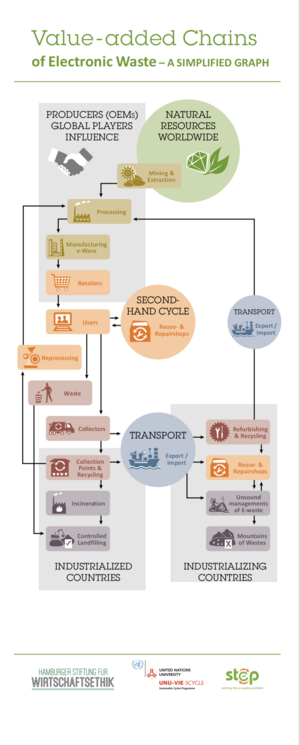
The first era-paper takes a critical look at the value chain of electrical recycling, including its social, ethical and environmental risks. As part of a policy analysis, the reasons for the discrepancy between a sophisticated, mandatory regulatory framework and its inadequate practical implementation are examined.
In addition to the frequently criticised lack of resources and staffing at the relevant institutions, there are significant weaknesses in the monitoring and sanctioning mechanisms. The analysis reveals that even greater influence must be attributed to misguided incentive systems, as they make it economically attractive to circumvent regulatory frameworks and exploit existing legal grey areas to one’s own advantage.
This applies above all to trade in waste electrical and electronic equipment (WEEE) outside Europe, where the boundary between legality and illegality – and therefore also the distinction between the lawful export of second-hand goods and the illegal export of electronic scrap – is blurred, making it easy to circumvent the legal requirements.
In order to enhance the effectiveness of the existing regulatory framework, define starting points for processes of social change, and minimise ethical, social and environmental risks, the study identifies measures and levers for change.
These include, in addition to raising consumer awareness and improving take-back schemes, creating transparency regarding the business activities of market participants and revising the incentive structure where it runs counter to the legal framework.
Fish: an Ethical Risk Assessment
Back to the recycling value chain
Back to Ethical Risk Assessments | Sectors