
Pupils’ perspectives. Why perspectives should be varied!
Pupils’ perspectives. Why perspectives should be varied!
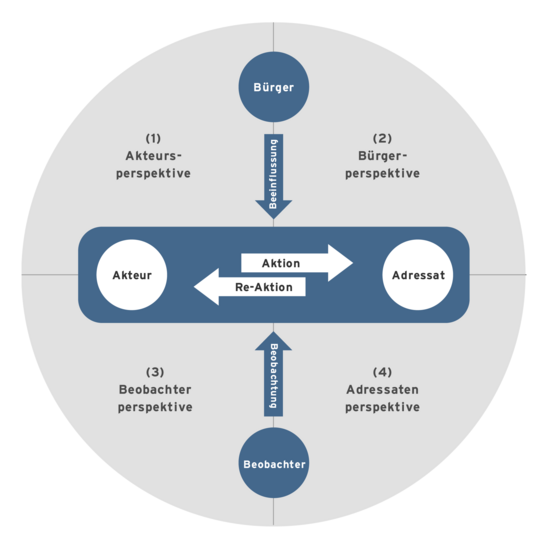
There are various options for structuring the adoption of different perspectives in the classroom: Should pupils be introduced to ethically relevant issues (1) as active participants, (2) as passive recipients, (3) as outside observers, or (4) as citizens taking action?
(1) Actor: Economic and political education aims to develop the ability to take action. It therefore often addresses pupils as economic and political actors. This makes sense in the context of economic ethics education where there are opportunities or necessities for individual action.
(2) Addressee: Young people are also counterparts to other actors, to whose actions they can or must react. This makes sense in economic and ethical education where the initiative regularly comes from the other side of the market.
(3) Observers: Pupils observe the actions and interactions of other actors without being involved themselves. In economic ethics education, the position of the outside observer enables a neutral assessment of others’ actions.
(4) Citizens: Young people are, not least, confronted with social dilemmas whose resolution requires political intervention. This calls for the perspective of the responsible economic citizen, who influences events by helping to shape the framework conditions.
The ethos project ensures that these perspectives are fully incorporated throughout the entire curriculum.