
03.09.2018
New teaching resources: the VIEW! project focuses on palm oil cultivation
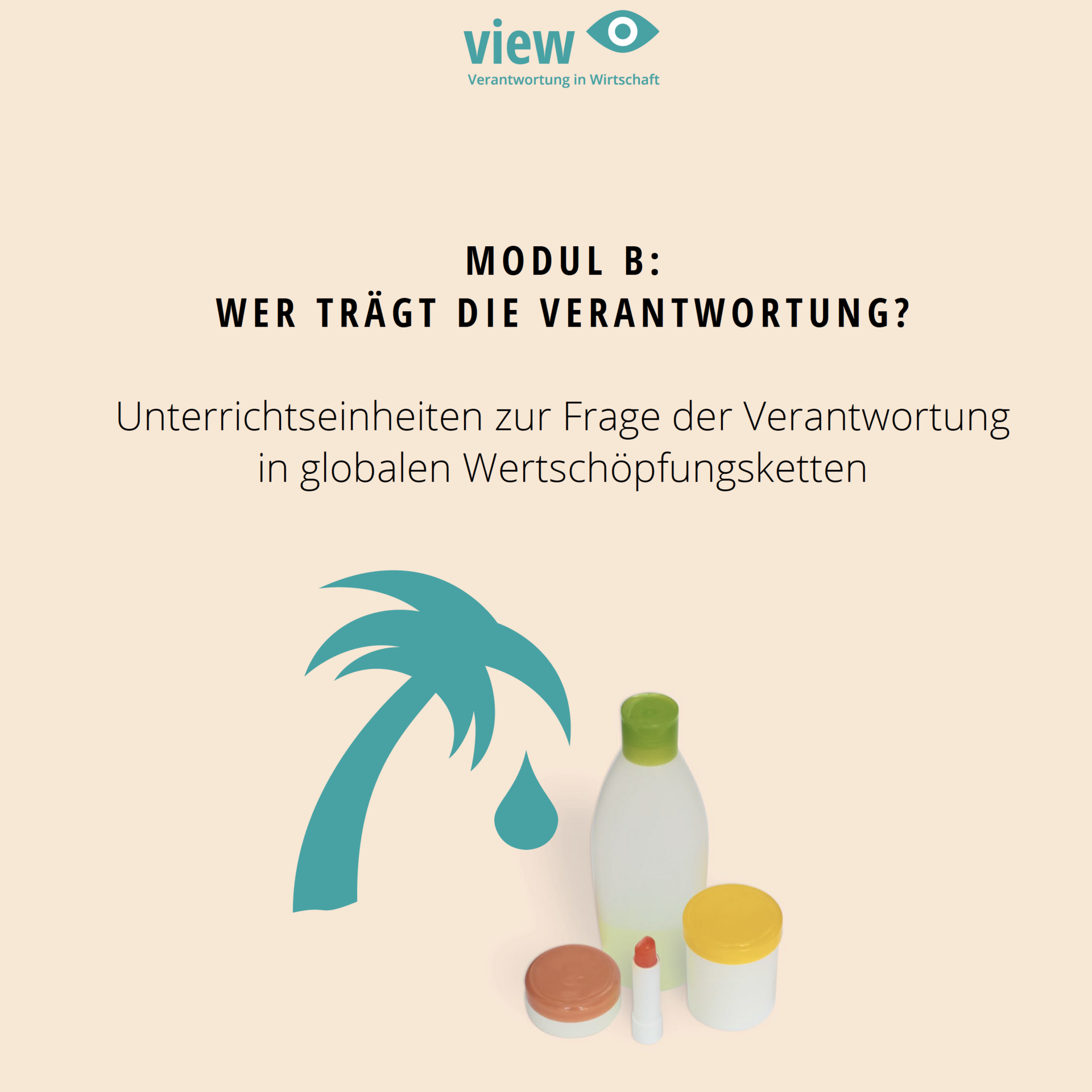
One in every two products from the supermarket contains palm oil. Yet, whilst this raw material is highly attractive to the food and cosmetics industries, its impact in the countries where it is grown is often negative. Who bears responsibility for the social and environmental consequences of rising demand? Pupils explore this question using the teaching materials from the VIEW! project.
Neutral in flavour, heat-stable and with a long shelf life – these properties make palm oil more attractive to manufacturers of numerous products than other vegetable oils. And for some time now, this raw material has also been used in so-called biofuel. Oil palms bear fruit all year round and are three times as productive as rapeseed.
However, the expansion of cultivation areas in South America and South-East Asia has consequences: tropical rainforests are being cleared, species-rich habitats destroyed, local communities dispossessed and workers exploited – according to reports from non-governmental organisations. At the same time, countries such as Indonesia, the world’s largest producer of palm oil, are dependent on the sector, as it brings in foreign investment and creates millions of jobs.
The teaching materials, now available free of charge as a PDF download, present key facts about palm oil cultivation and its consequences. In a panel discussion, pupils explore the issue of responsibility from the perspective of key stakeholders in politics, business and civil society, and attempt to identify possible solutions.
VIEW! is a collaborative project between the Hamburger Stiftung für Wirtschaftsethik and the Dr. Jürgen Meyer Stiftung, Cologne.