
20.03.2019
New teaching resources: VIEW! module on the timber and furniture industry
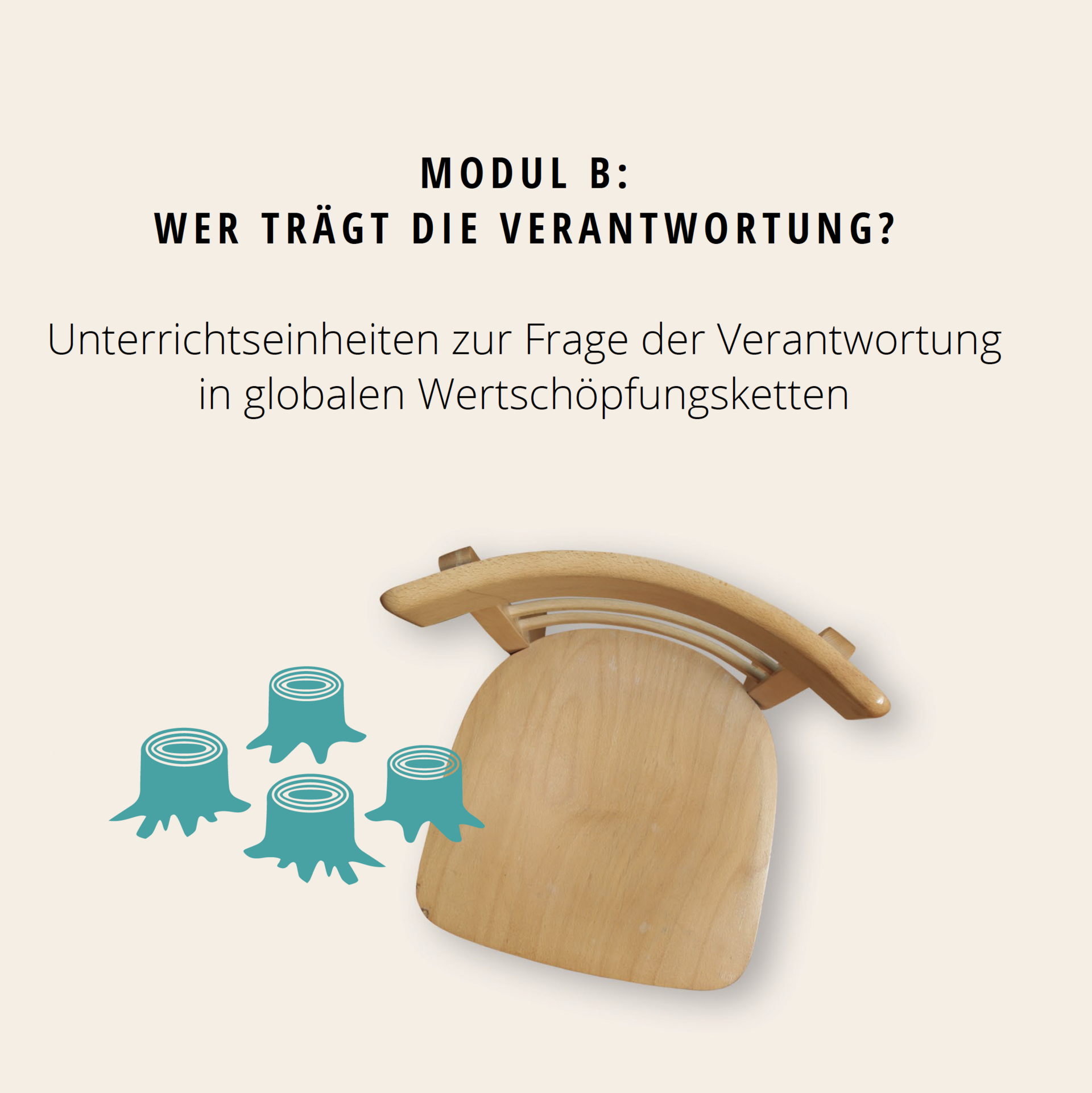
To mark International Forest Day on 21 March, the Dr Jürgen Meyer Stiftung and the Hamburger Stiftung für Wirtschaftsethik have published teaching materials on environmental and social risks in the timber supply chain. Using the primeval forests of Siberia as an example, the lesson plan explores the consequences of unsustainable forestry for people and nature.
In it, pupils adopt the perspectives of state, economic and civil society actors and discuss the difficult question of who is responsible for environmental destruction and human rights violations.
Although timber is a renewable resource, instead of establishing forestry practices geared towards sustainability, primeval forests worthy of protection are being cleared in many places at a time of steadily rising demand. The consequences are often dramatic. In many regions of Siberia, for example, it is not only ecosystems that suffer; the habitats of indigenous peoples are also being destroyed. Timber from clear-cutting operations – some of which are illegal – often ends up on the European market via roundabout routes and ultimately as furniture in German living rooms. Although major manufacturers now operate their own forestry operations, emphasise strict compliance with legal requirements and source timber with sustainability certification, the furniture industry continues to face criticism. At the same time, consumers are increasingly demanding furniture in the lower price segment and replacing their furnishings at ever shorter intervals. In Siberia, on the other hand, forestry is a key economic sector and provides jobs for many people.
The teaching material, designed for vocational and general education schools, is published as the tenth module in the ‘VIEW! – Responsibility in Business’ series, a collaborative project between the Dr Jürgen Meyer Stiftung and the Hamburger Stiftung für Wirtschaftsethik. Units are also available on global value chains in the textile and mobile phone manufacturing sectors, as well as in cotton, palm oil and soya production, and in the cocoa, fisheries and tourism sectors.
“When teaching ethics in schools and vocational training, it is always necessary to take economic requirements and consequences into account when we talk about the organisation of global supply chains,” said Rüdiger Winkler, Executive Director of the Dr Jürgen Meyer Stiftung. “Through our project, we aim to contribute to addressing issues of business ethics in an appropriate and balanced manner.” A key objective of the teaching units is to foster young people’s ability to make sound judgements. “The high demand for our materials from schools shows us time and again that a close thematic link to the vocational fields of apprentices sparks a strong interest in the thoroughly complex issues addressed in our teaching materials,” said Dr Jesco Kreft, Executive Director of the Hamburger Stiftung für Wirtschaftsethik.
All modules of the teaching programme “VIEW! – Responsibility in Business”, including photocopiable worksheets, background materials, teaching guides and recommendations for implementation, are available free of charge as PDF downloads.
“VIEW! – Responsibility in Business” is a collaborative project between the Dr. Jürgen Meyer Stiftung and the Hamburger Stiftung für Wirtschaftsethik. The Dr. Jürgen Meyer Stiftung is a charitable foundation based in Cologne. In accordance with the wishes of the founder, the entrepreneur Dr Jürgen Meyer, who died in 2007, ‘ethics in business’ is at the heart of the foundation’s purpose. The non-profit Hamburger Stiftung für Wirtschaftsethik focuses its work on raising awareness of and discussing business and responsibility.
Downloads
-
VIEW! teaching resources on the topic of wood (PDF download)
-
Press release (PDF download)